Layered Multiplier Systems Reshape Return Patterns in Modern Digital Slot Titles
Written by Taylor Lehmann · Aug 18, 2026
Layered Multiplier Systems Reshape Return Patterns in Modern Digital Slot Titles
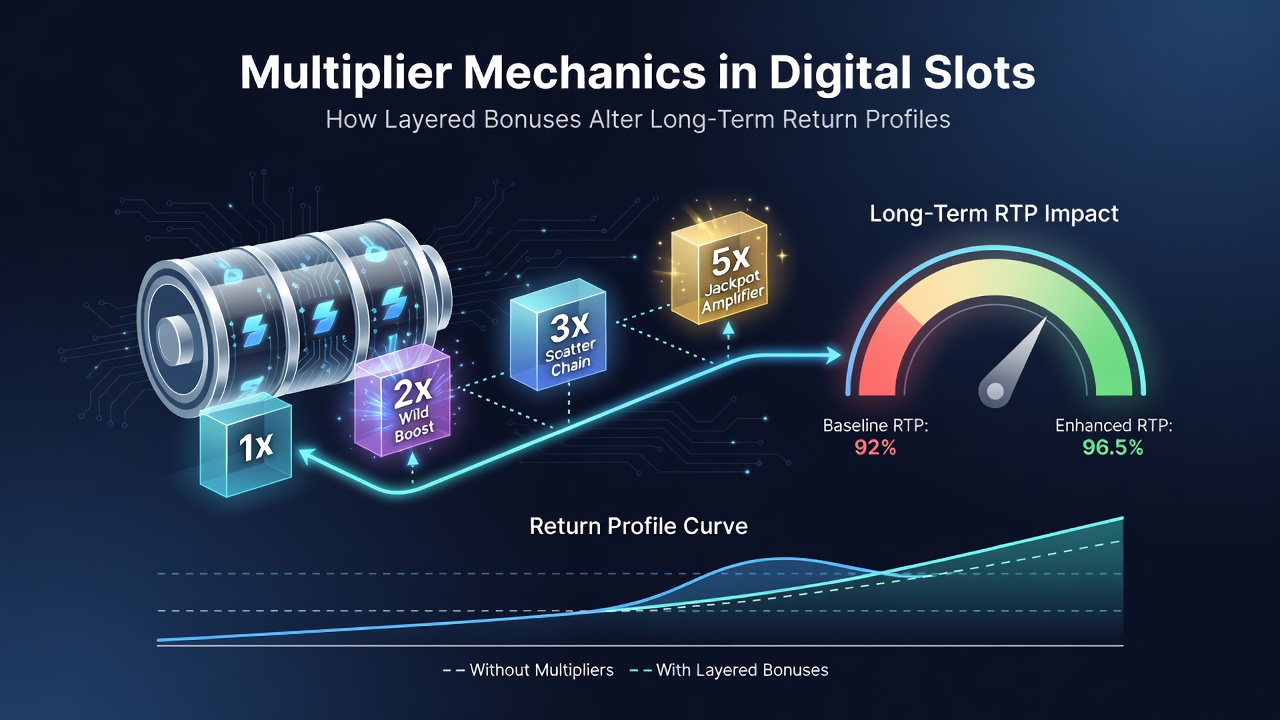
Digital slot games rely on multiplier mechanics that stack across multiple layers, and these structures directly influence long-term return profiles by adjusting expected values during extended play sequences. Research from gaming laboratories shows that base game multipliers often combine with bonus features such as free spins or re-spin sequences, creating compounded effects on payout distributions over thousands of spins.
Core Components of Multiplier Integration
Multipliers appear in base spins, during triggered features, and within progressive jackpot pathways, while each layer applies its own scaling factor to winning combinations. Data from slot certification reports indicates that a 2x multiplier on a base win can rise to 5x or higher when paired with a secondary bonus multiplier, and the combined result feeds into the overall return-to-player calculation that operators publish for regulatory compliance.
Engineers program these interactions through random number generators that select symbols and trigger events independently, yet the mathematical model accounts for every possible overlap. Observers note that games released in 2025 and early 2026 frequently introduce three-tier multiplier ladders, where the third tier activates only after specific symbol alignments occur within the bonus round itself.
Impact on Long-Term Return Calculations
Long-term return profiles shift when layered bonuses introduce additional multiplier stages because the probability-weighted contribution of each stage alters the average payout per spin. Figures from independent testing facilities reveal that a game with a published 96.5 percent RTP can deliver effective returns above or below that figure during finite sessions when multipliers cluster in bonus sequences.
Analysts at the Nevada Gaming Control Board have documented how games with escalating multipliers during free spins produce higher variance, meaning players encounter longer stretches of smaller outcomes punctuated by occasional large scaled wins. This pattern holds steady across different titles because the underlying probability tables remain fixed once the game receives certification.
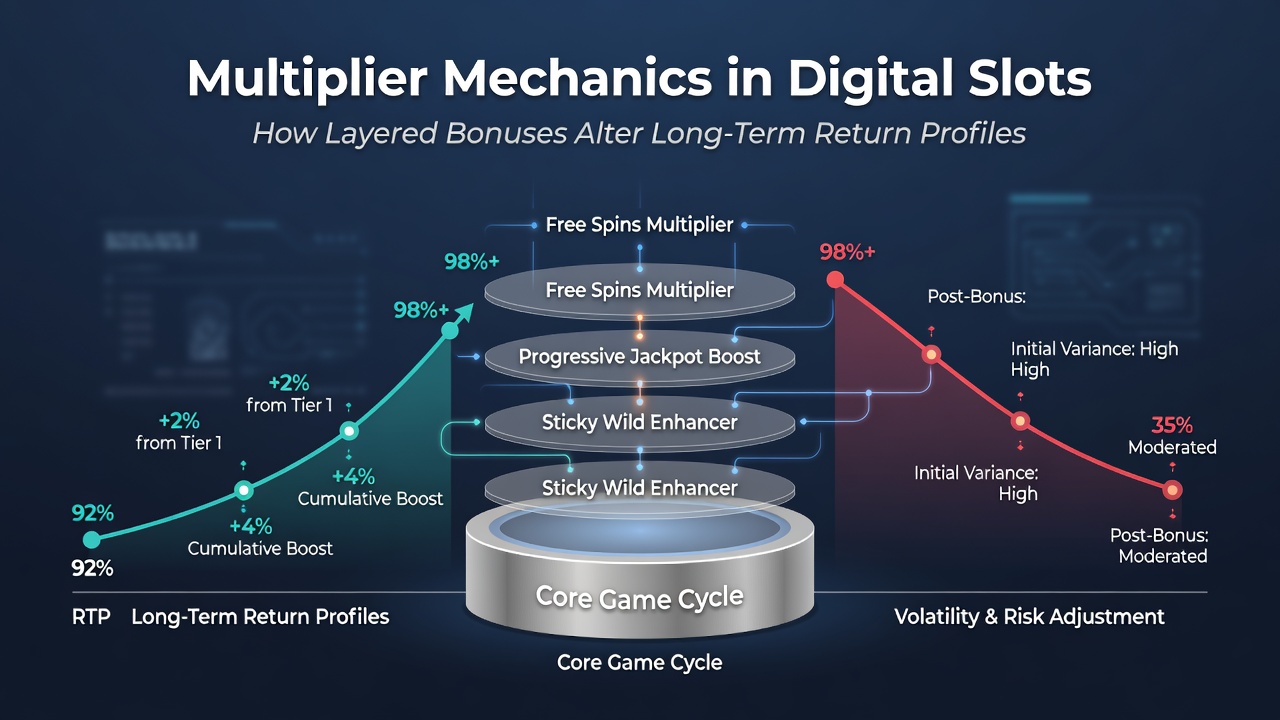
Simulation studies conducted by university research teams demonstrate that extending play from 10,000 to 100,000 spins reduces the deviation from the theoretical RTP, even when multiple multiplier layers remain active. The convergence occurs because each outcome remains independent, and the aggregate effect of all layers averages toward the programmed distribution over sufficient trials.
Examples of Layered Bonus Structures
One popular title released in August 2026 incorporates a base 1x multiplier that advances to 3x on the first re-spin and reaches 8x when a third consecutive trigger lands. Testing data confirms that the incremental RTP contribution from the 8x stage equals roughly 1.8 percent of total return, while the lower stages account for the remaining balance.
Another configuration uses a meter that fills with each bonus symbol, unlocking successive multiplier tiers only after the meter reaches preset thresholds. Reports from European testing agencies show that this meter-driven approach spreads multiplier value across more spins, resulting in a smoother return curve compared with all-or-nothing high-tier triggers.
Those who examine paytable disclosures find that some titles list separate RTP figures for base game and bonus modes, allowing operators to display the weighted average that reflects actual play distribution. The Australian gambling regulator requires such breakdowns on certain licensed platforms, giving players clearer visibility into how each multiplier layer contributes to the final percentage.
Regulatory and Certification Considerations
Certification bodies evaluate every multiplier interaction before approving a title for release, confirming that the random selection process treats each layer fairly and that published return figures accurately represent long-term outcomes. Updates scheduled for late 2026 in several jurisdictions emphasize clearer disclosure of bonus frequency and multiplier scaling ranges.
Industry associations have compiled comparative tables that list average bonus trigger rates alongside typical multiplier values, helping operators select titles whose return profiles align with their target player demographics. These tables draw from aggregated data submitted by multiple testing laboratories rather than single-source estimates.
Conclusion
Layered multiplier mechanics continue to evolve within digital slot frameworks, and the resulting adjustments to long-term return profiles follow directly from the mathematical weighting of each bonus stage. Certification records, simulation outputs, and regulatory filings together establish that these systems produce predictable aggregate results once sufficient spin volumes accumulate, regardless of short-term clustering patterns.