Mechanics of Bet Scaling in Networked Jackpot Environments
Written by Taylor Lehmann · Sep 20, 2026
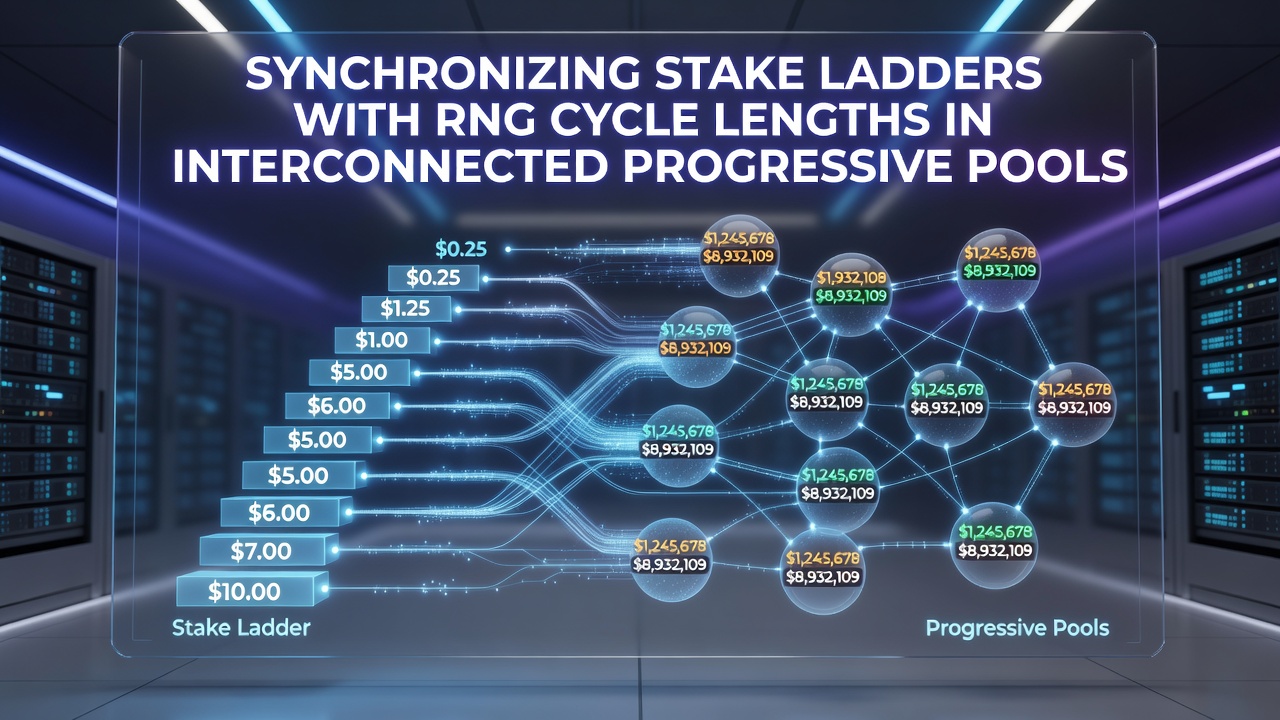
The concept of synchronizing stake ladders with RNG cycle lengths in interconnected progressive pools does not align with established technical standards in regulated gaming systems. Modern random number generators used in certified casino platforms operate without predictable cycles that players or operators can align with betting patterns for any measurable advantage.
Progressive jackpot systems link contributions from numerous machines or online terminals into shared prize pools, with operators in various jurisdictions managing these through centralized servers. Data from gaming control authorities indicate that prize growth depends on fixed percentages of wagers rather than any synchronization between individual stake sequences and generator periods. Stake ladders refer to structured betting progressions where players adjust wager amounts across rounds. Research from technical testing laboratories shows that certified RNG implementations rely on continuous seeding from hardware sources or cryptographic algorithms, eliminating short-term patterns that could be matched to bet adjustments. ## Core Components of Progressive Pool Operations
Networked jackpot environments aggregate funds from multiple sites, with each participating terminal contributing a small fraction of every bet to the common pool. Regulatory frameworks in places such as Nevada and parts of Australia require independent verification that pool calculations remain independent of any single player's betting sequence. RNG cycle lengths describe the theoretical period before a generator sequence repeats, yet accredited systems employ methods that render practical prediction impossible within operational timeframes. Studies conducted by university engineering departments confirm that entropy sources and frequent reseeding disrupt any usable repetition for external observers. Operators track pool balances through secure databases that update in real time, with payout triggers determined by predefined probability thresholds rather than external timing alignments. Figures from industry reports released by the European Gaming and Betting Association highlight that pool integrity checks occur at regular intervals to maintain compliance across connected venues. ## Technical Constraints on Alignment Attempts
Attempts to coordinate stake changes with generator periods encounter fundamental barriers because certified RNG outputs undergo continuous statistical testing for uniformity and independence. Gaming laboratories in multiple regions apply suites of tests that detect and reject any implementation showing detectable periodicity under normal operating conditions. Interconnected pools further complicate such coordination because contributions arrive from geographically dispersed terminals operating on separate RNG instances. Data compiled by Canadian provincial regulators demonstrates that cross-site aggregation uses standardized protocols that isolate each terminal's random stream from pool management logic. Stake ladder strategies documented in player forums lack supporting evidence from controlled trials or regulatory audits. Observers note that any perceived correlation between bet sequences and outcomes stems from normal variance rather than engineered alignment opportunities.  ## Regulatory Oversight Across Regions
Authorities in the United States and Australia mandate that progressive systems undergo third-party evaluation before deployment, with ongoing audits verifying that random generation remains insulated from betting interfaces. These evaluations include assessments of pool contribution formulas and trigger mechanisms to ensure fairness across all participants. September 2026 updates to certain multi-jurisdictional standards emphasize enhanced logging requirements for jackpot activity, requiring operators to maintain records that allow reconstruction of pool states without reference to individual player stake patterns. Such measures reinforce separation between random output and wager management systems. ## Conclusion
Technical documentation from accredited testing bodies establishes that progressive jackpot networks function through fixed contribution rates and independently verified random processes. No verified methodology exists for aligning stake ladders with RNG periods in a manner that alters expected outcomes beyond the parameters set by game mathematics and regulatory approval.
Mechanics of Bet Scaling in Networked Jackpot Environments
Progressive jackpot systems link contributions from numerous machines or online terminals into shared prize pools, with operators in various jurisdictions managing these through centralized servers. Data from gaming control authorities indicate that prize growth depends on fixed percentages of wagers rather than any synchronization between individual stake sequences and generator periods. Stake ladders refer to structured betting progressions where players adjust wager amounts across rounds. Research from technical testing laboratories shows that certified RNG implementations rely on continuous seeding from hardware sources or cryptographic algorithms, eliminating short-term patterns that could be matched to bet adjustments. ## Core Components of Progressive Pool Operations
Networked jackpot environments aggregate funds from multiple sites, with each participating terminal contributing a small fraction of every bet to the common pool. Regulatory frameworks in places such as Nevada and parts of Australia require independent verification that pool calculations remain independent of any single player's betting sequence. RNG cycle lengths describe the theoretical period before a generator sequence repeats, yet accredited systems employ methods that render practical prediction impossible within operational timeframes. Studies conducted by university engineering departments confirm that entropy sources and frequent reseeding disrupt any usable repetition for external observers. Operators track pool balances through secure databases that update in real time, with payout triggers determined by predefined probability thresholds rather than external timing alignments. Figures from industry reports released by the European Gaming and Betting Association highlight that pool integrity checks occur at regular intervals to maintain compliance across connected venues. ## Technical Constraints on Alignment Attempts
Attempts to coordinate stake changes with generator periods encounter fundamental barriers because certified RNG outputs undergo continuous statistical testing for uniformity and independence. Gaming laboratories in multiple regions apply suites of tests that detect and reject any implementation showing detectable periodicity under normal operating conditions. Interconnected pools further complicate such coordination because contributions arrive from geographically dispersed terminals operating on separate RNG instances. Data compiled by Canadian provincial regulators demonstrates that cross-site aggregation uses standardized protocols that isolate each terminal's random stream from pool management logic. Stake ladder strategies documented in player forums lack supporting evidence from controlled trials or regulatory audits. Observers note that any perceived correlation between bet sequences and outcomes stems from normal variance rather than engineered alignment opportunities.
## Regulatory Oversight Across Regions
Authorities in the United States and Australia mandate that progressive systems undergo third-party evaluation before deployment, with ongoing audits verifying that random generation remains insulated from betting interfaces. These evaluations include assessments of pool contribution formulas and trigger mechanisms to ensure fairness across all participants. September 2026 updates to certain multi-jurisdictional standards emphasize enhanced logging requirements for jackpot activity, requiring operators to maintain records that allow reconstruction of pool states without reference to individual player stake patterns. Such measures reinforce separation between random output and wager management systems. ## Conclusion
Technical documentation from accredited testing bodies establishes that progressive jackpot networks function through fixed contribution rates and independently verified random processes. No verified methodology exists for aligning stake ladders with RNG periods in a manner that alters expected outcomes beyond the parameters set by game mathematics and regulatory approval.